Designing Spaces That Feel Effortless and IntentionalVisual Continuity Across Surfaces
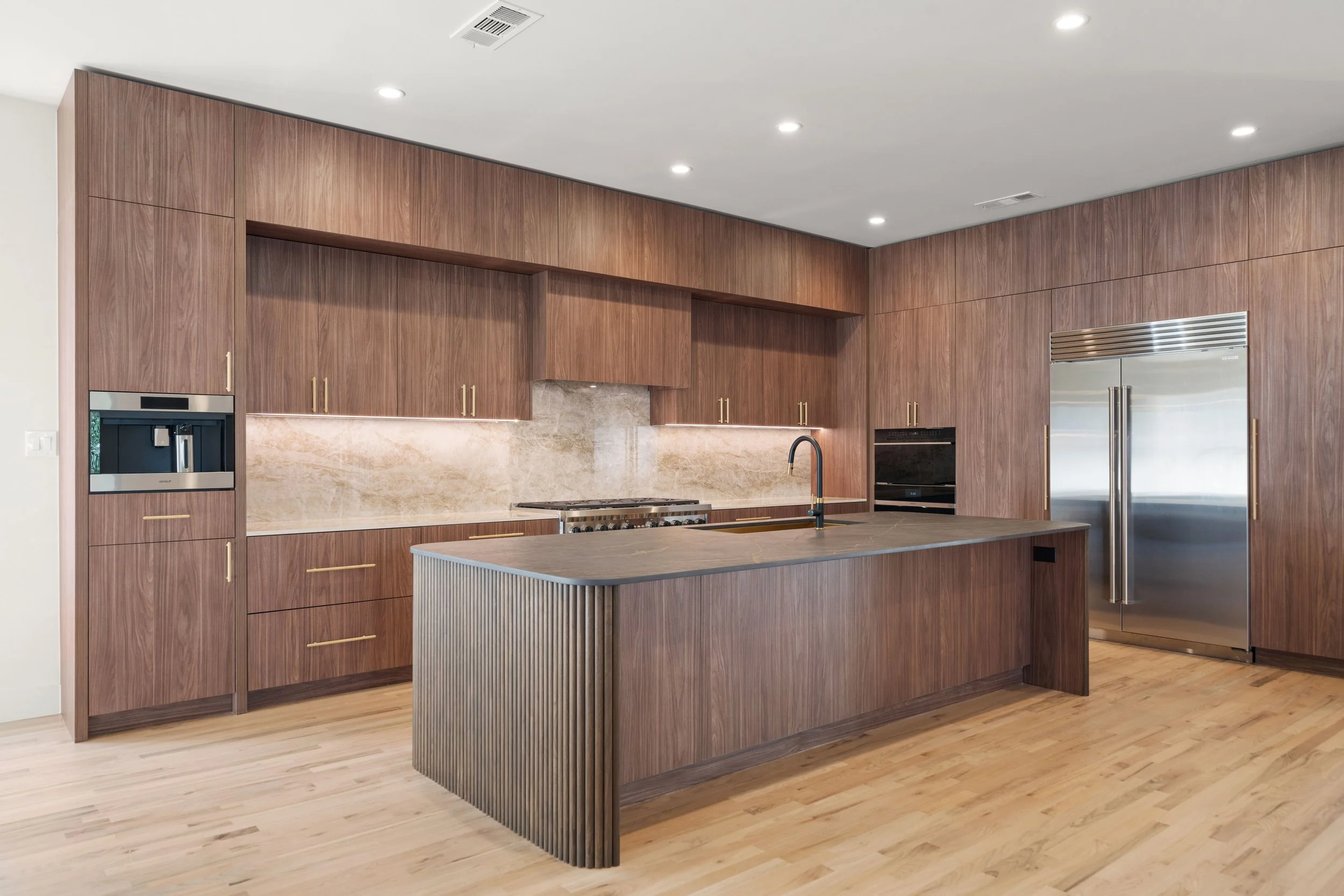
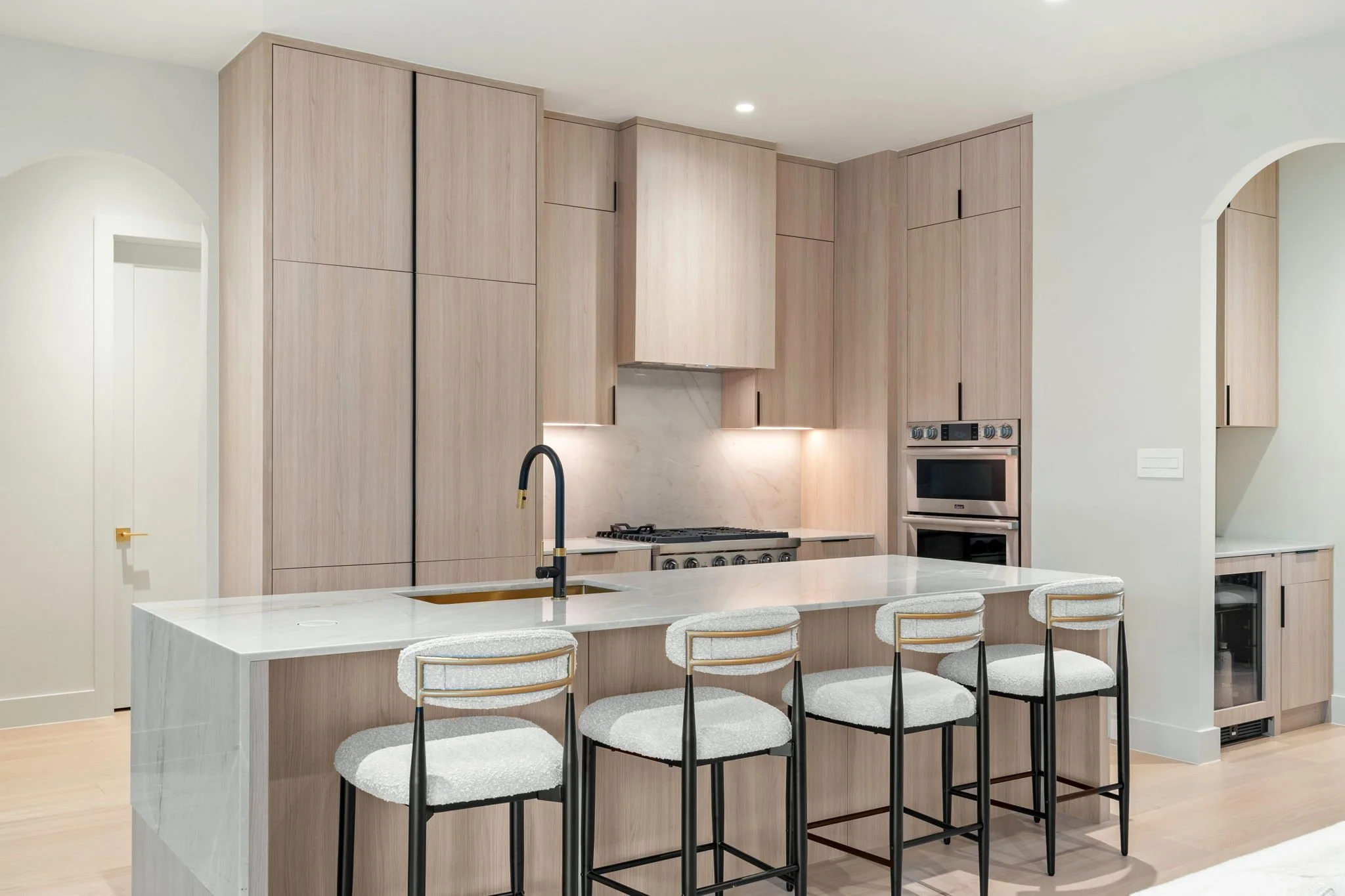
Walk into a truly exceptional kitchen and you’ll notice something subtle: nothing feels forced. Surfaces flow. Cabinetry aligns effortlessly with wall panels. Countertops extend like uninterrupted planes. The space feels calm, intentional, and architectural.
This is the power of visual continuity across surfaces—one of the most important principles in modern cabinetry and millwork design.
Research in environmental psychology shows that cohesive environments are perceived as more luxurious and calming because the brain processes consistent visual information more easily. In other words, when materials, tones, and proportions align, the space feels elevated without trying too hard.
At its core, visual continuity is about control—over materials, construction, and installation.
Material Consistency Creates Visual Calm
The foundation of continuity begins with finish selection. Thermally fused laminates (TFL) and high-pressure laminates (HPL) offer exceptional consistency because they are manufactured under controlled pressure and temperature. Brands like Egger produce synchronized textures where the grain pattern matches the tactile feel, ensuring uniformity across every panel.
Unlike spray-painted finishes, laminates maintain consistent color from sheet to sheet and resist fading. They will chip before they delaminate, which makes them structurally stable and visually reliable over time.
Matte finishes further enhance continuity. High-gloss surfaces reflect light inconsistently, highlighting fingerprints and minor imperfections. Super-matte surfaces, including advanced fingerprint-resistant finishes from manufacturers like AGT, diffuse light evenly. The result is cabinetry that reads as a smooth architectural plane rather than a reflective object.
The goal is not shine—it is cohesion.
Managing Wood Grain for Flow
Natural veneers introduce warmth, but they require careful planning to preserve continuity. Manufacturers like Decospan produce pre-finished veneers with multiple lacquer layers to ensure consistent tone and sheen.
However, continuity depends on fabrication decisions:
Aligning grain direction across doors
Sequencing panels during production
Maintaining consistent vertical or horizontal flow
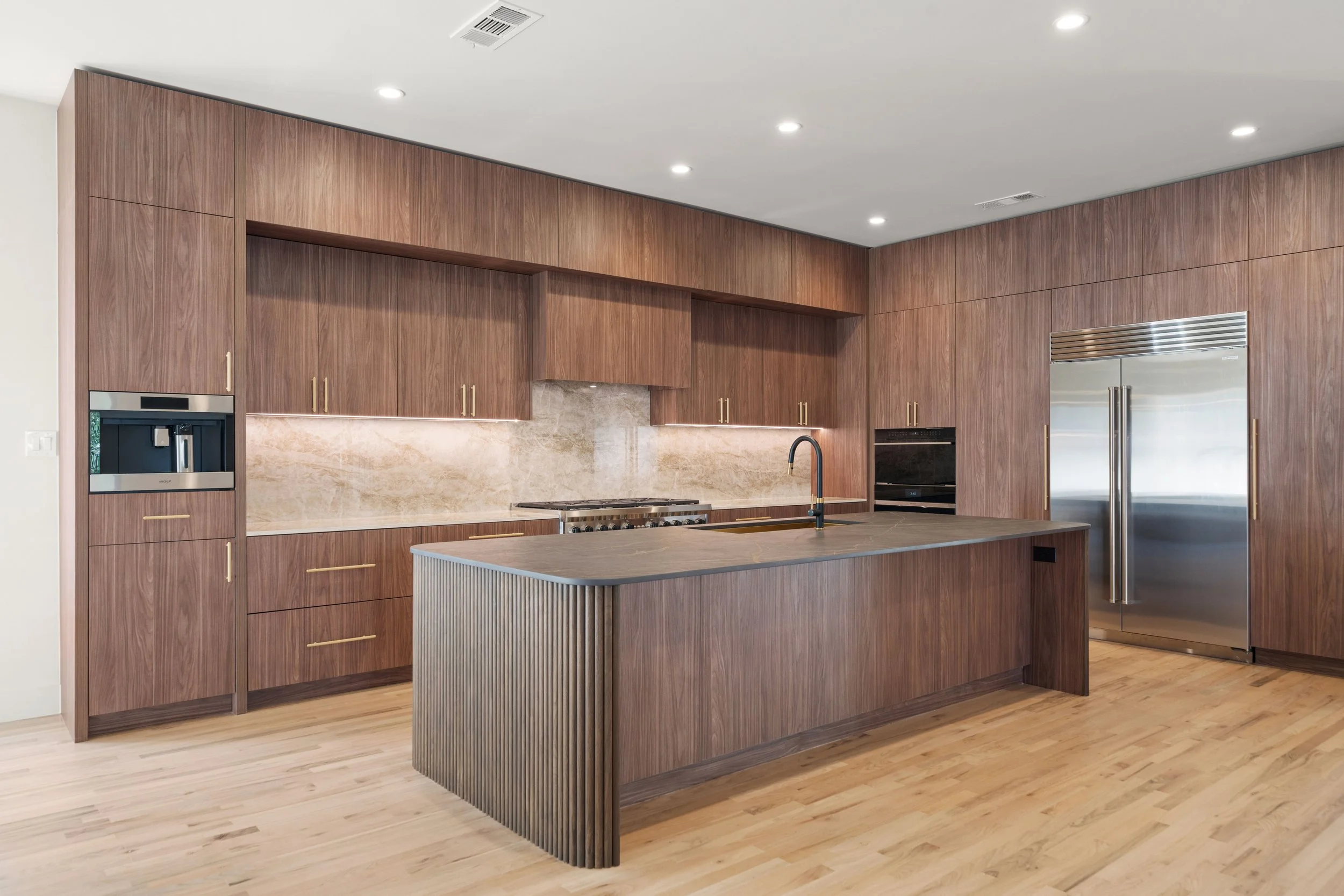
Vertical grain emphasizes ceiling height. Horizontal grain elongates walls. Mixing directions unintentionally disrupts rhythm.
When cabinetry is built with structural precision—such as full ¾" material construction including back panels—it allows panels to remain aligned long-term. Stability preserves visual flow.
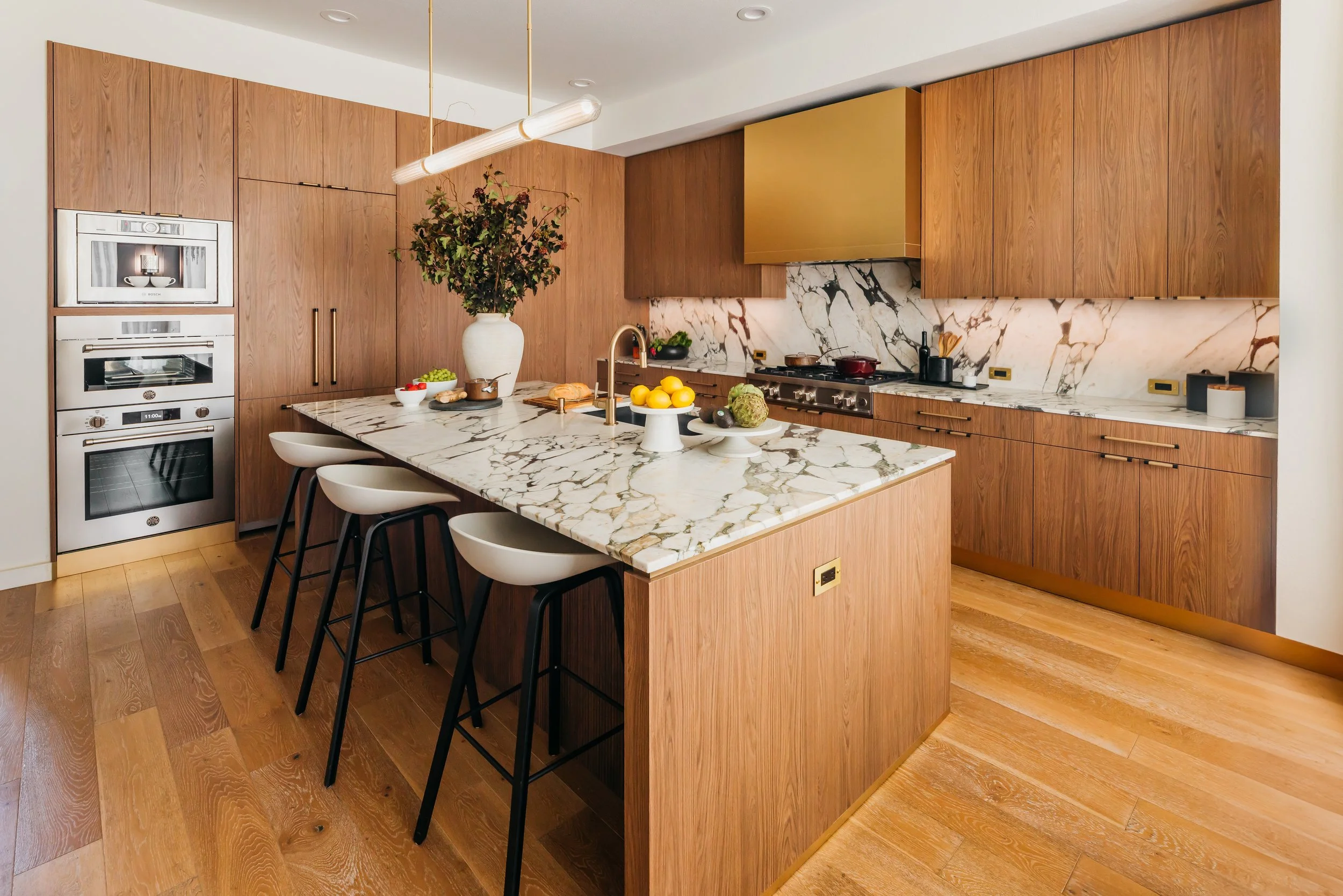
Integrating Countertops and Appliances
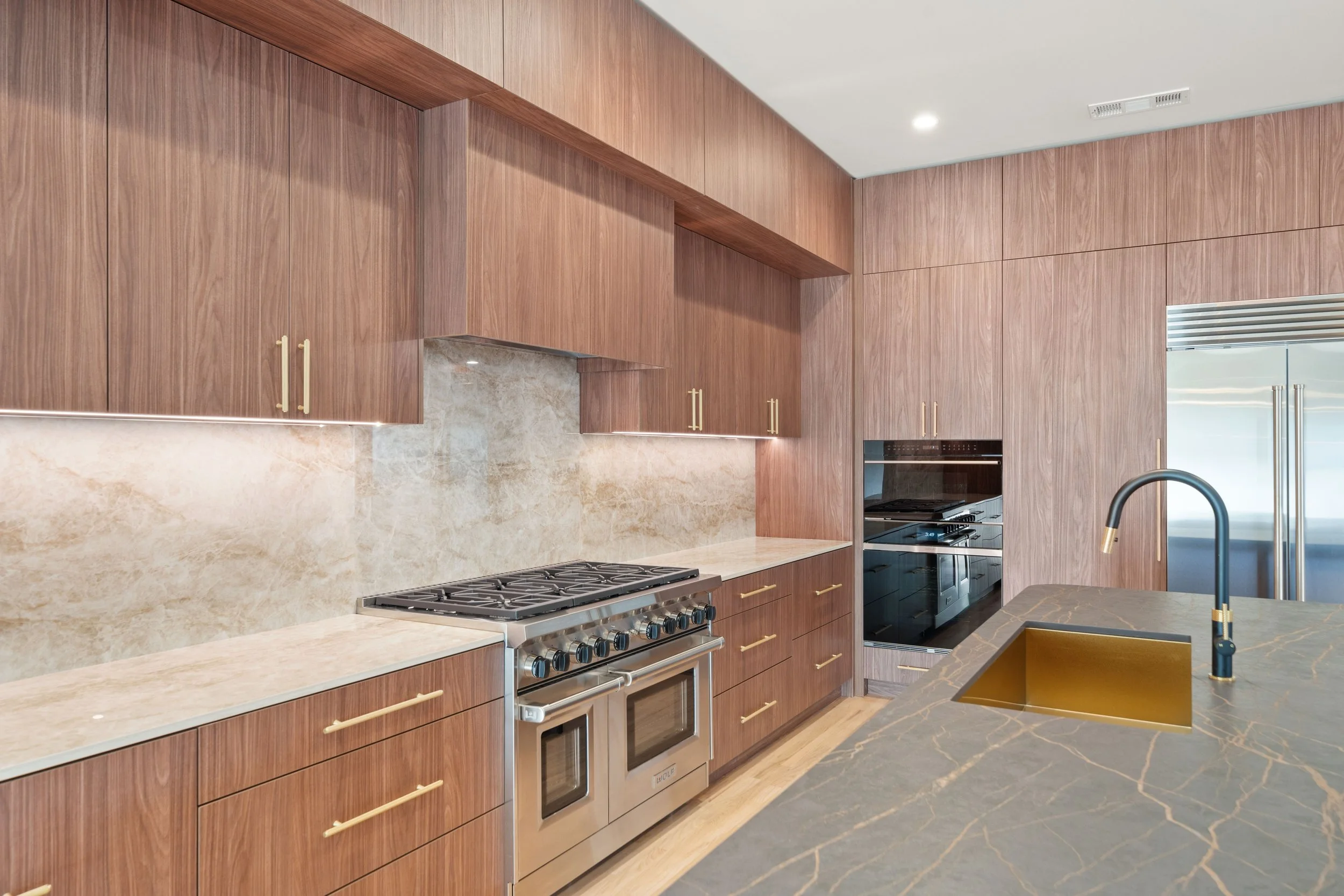
True visual continuity extends beyond cabinet doors. Countertops and appliances must participate in the same language.
Natural stones like quartzite offer depth while maintaining durability. The Natural Stone Institute notes that properly installed and maintained natural stone can last over a century—making it both a visual and generational investment.
Waterfall edges, flush-mounted cooktops, and panel-ready refrigeration systems—such as those by Sub-Zero—allow appliances to disappear into cabinetry. Instead of breaking the visual plane, they reinforce it.
Precision matters. Even minor misalignments during installation can disrupt a minimalist kitchen. Cabinet leveling, accurate templating, and proper sequencing are essential to preserving surface continuity.
Dimensional Rhythm and Proportion
Continuity is also about rhythm. Cabinet widths typically follow consistent increments, creating predictable spacing and alignment. Repetition of proportions across a wall builds a sense of order.
However, purely modular systems often require fillers that interrupt visual flow. A hybrid approach—combining standardized cabinet boxes with custom adjustments—ensures clean lines without awkward gaps.
Consistency in proportion, depth, and reveal spacing transforms cabinetry from furniture into architecture.
The Essence of Seamless Design
Visual continuity across surfaces is achieved through:
Consistent material selection
Controlled finishes
Grain alignment
Precise installation
Integrated appliances
Proportional rhythm
When cabinetry, wall panels, countertops, and appliances work together, the space no longer feels assembled. It feels composed.
And that quiet confidence is what defines modern luxury.