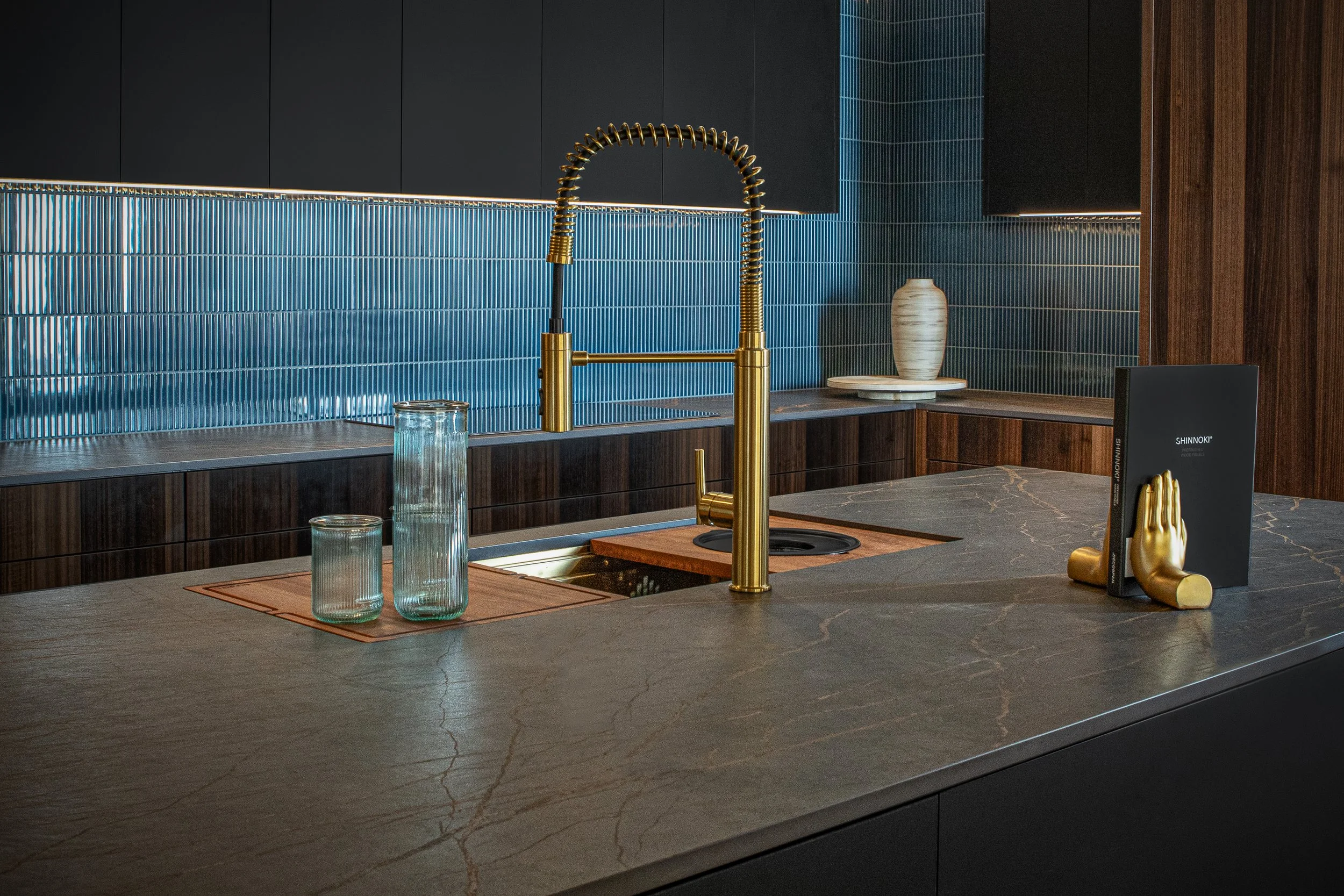
4 Kitchen Details That Separate Good Design from Great Design
When a kitchen is truly exceptional, it's difficult to pinpoint why. The finishes are beautiful, yes. The layout works. But there's something else — a quiet confidence to how it functions, a quality that reveals itself not on day one but over years of daily use. That quality almost never comes from the decisions that dominate the design conversation. It comes from the smaller ones: the technical, considered, easy-to-overlook choices that experienced designers know to make and most homeowners never think to ask about.
These are four of those details. Whether you're a homeowner navigating your first luxury kitchen renovation or a designer refining how you spec cabinetry for high-end residential projects, we hope they're useful.
01 — Placement
Your Dishwasher Should Be on the Right — and the Door Should Open Away from the Sink
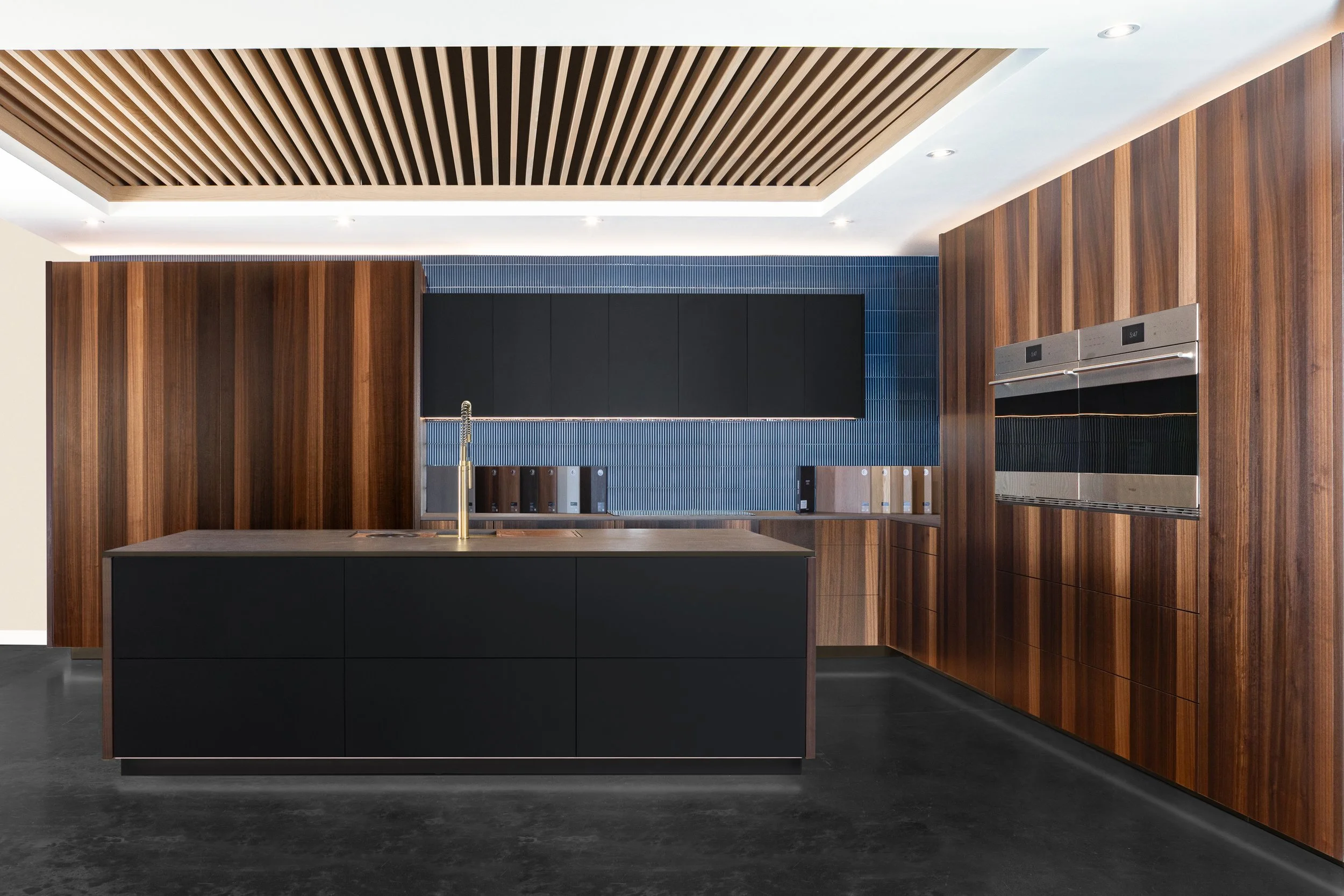
It's one of those decisions that sounds almost too minor to dwell on — until you've lived with the wrong arrangement for a few years. For a right-handed user, placing the dishwasher to the right of the sink creates a workflow that just makes sense: rinse, pivot right, load. No reaching across your body, no stacking rinsed dishes on the wrong counter while you wait for space to open up. The motion becomes second nature. When it's reversed, you notice it every single time.
Hinge direction matters just as much. A dishwasher door that swings toward the sink closes off that whole workspace every time you open it — which, if you have a family or do any real cooking, is constantly. The door should swing away, keeping your prep area clear and your flow uninterrupted.
"One thing that rarely comes up in the design conversation: steam. A panel-ready dishwasher vents hot steam upward on every cycle, and years of repeated exposure can compromise the edge banding seal on adjacent cabinet panels — causing splits and discoloration that are frustrating and costly to address later."
This is why dishwasher clearance and edge banding quality are part of every kitchen review at Kabeenet, not something we revisit at installation. High-quality ABS-bonded edge banding handles heat and moisture far better than standard alternatives — and specifying it correctly from the start means you won't be troubleshooting it five years down the road.
02 — Storage
The 84-Inch Rule: Why Taller Pantry Cabinets Aren't Always the Better Choice
Floor-to-ceiling cabinetry is a compelling visual — and for the right space, it absolutely makes sense. But there's a practical ceiling to how useful tall storage actually is, and it sits at 84 inches. Anything above that height is beyond comfortable reach for most adults without a step stool, which means it quietly becomes the place where things go to be forgotten. Beautiful in photographs. Functionally, it’s dead space.
At Kabeenet, we recommend 84 inches as the standard height for tall pantry and utility cabinets. It gives you commanding visual presence without sacrificing a single shelf to inaccessibility. When ceilings warrant going higher, we build to 96 inches — but we're candid with clients and designers about what that upper section is realistically going to be used for, and we design it accordingly.
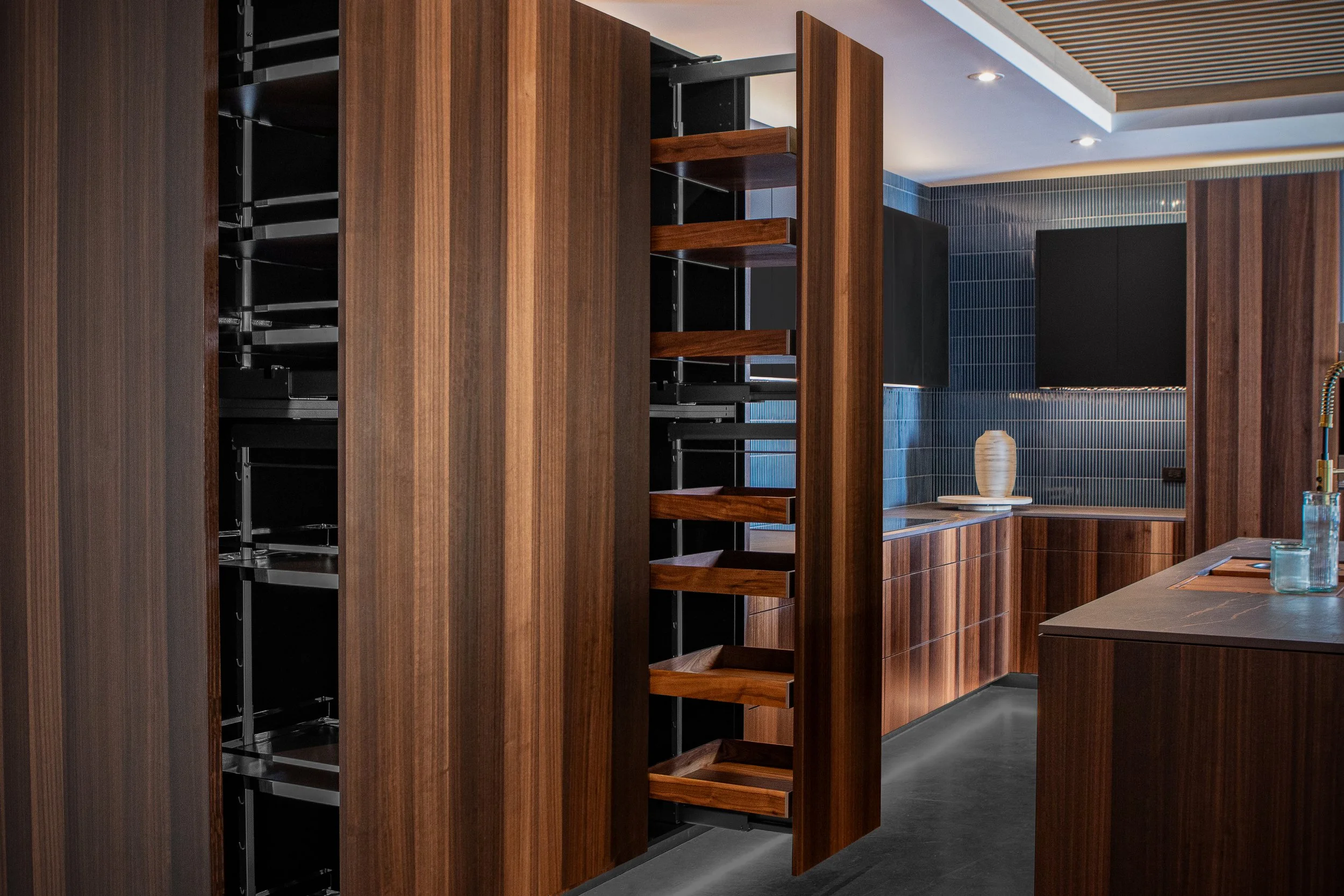
What the image above also illustrates is that the cabinet exterior is really only half the conversation. The interior organization — pull-out shelves, column inserts, soft-close mechanisms — is what determines whether a kitchen actually performs as well as it looks. For hardware, Kabeenet specifies Hafele-distributed brands throughout: Blum, Hettich, Kesseböhmer. These are mechanisms rated for hundreds of thousands of open-and-close cycles. In a kitchen built to last, that's exactly where the investment belongs.
03 — Finish
The Dark Interior Finish: A Small Detail That Changes How a Kitchen Feels
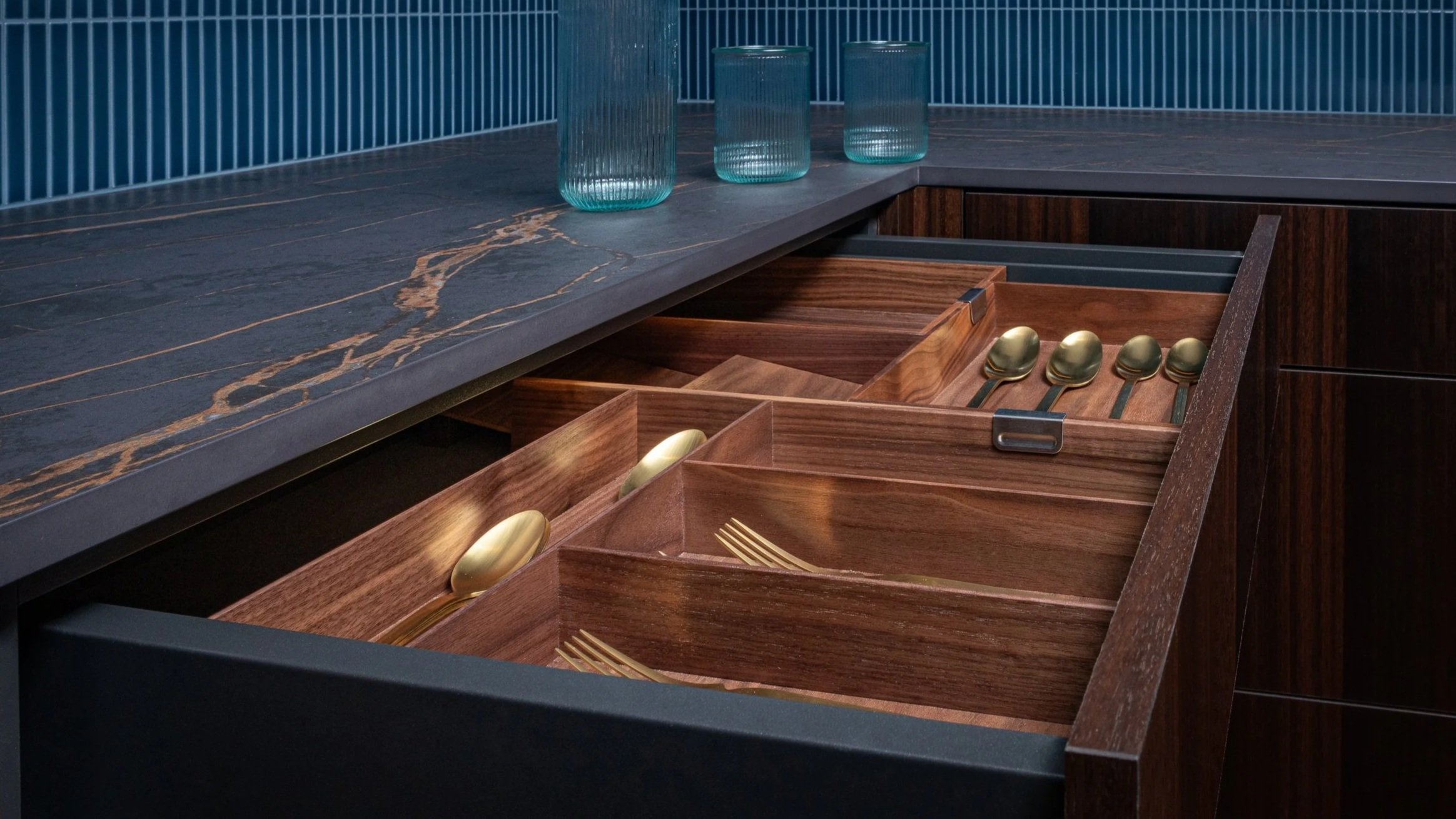
Open a cabinet in a high-end European kitchen and you'll notice that the interior is almost never white. The standard across premium cabinetry is a deep charcoal or dark gray interior — and once you know to look for it, you start to see it everywhere in the kitchens that feel most refined.
The practical case is straightforward: a dark interior conceals what a white one puts on full display — shelf-pin holes, screw heads, connection lines, and the minor imperfections that are simply part of assembling a cabinet box. None of this is a flaw, but in a white interior, it all competes for attention. In a dark interior, it disappears entirely.
"The aesthetic case is harder to quantify but easy to experience. There's a depth and composure to a dark cabinet interior when a drawer opens — it feels considered in a way that a plain white box simply doesn't, regardless of how beautiful the exterior finish is."
This is a standard Kabeenet detail across every product line. Not a finish upgrade, not something to add to the spec sheet — it's simply how every cabinet we build comes. For interior designers working with us, it's one of those things that tends to land well with clients during walkthroughs, because it reads immediately as a quality signal even if they can't articulate exactly why.
04 — Construction
Cabinet Box Thickness Is the Quality Detail Most People Never Ask About
There's a reason experienced designers and contractors ask about box thickness before almost anything else. The cabinet box is the structural foundation of everything — every hinge, every shelf, every drawer slide depends on it holding up over years of real use. And the difference between ½" and ¾" material is not a minor technical footnote. It's the difference between cabinetry that performs like furniture and cabinetry that slowly reminds you it wasn't.
Most mid-market cabinetry is built on ½" particleboard. It's cost-effective, it presents well in a showroom, and under sustained daily load — hinges cycling, shelves stacked, humidity shifting — it eventually shows you its limits. Screws work loose. Shelves develop a sag you tell yourself you'll address. The cabinet that looked fine at installation starts to feel like it needs tending to.
Kabeenet builds every cabinet — base, upper, and tall — from full ¾" material throughout. The back panel in particular is worth highlighting: a full ¾" back means the cabinet can be anchored to the wall at any point, not just at the top rail. No special brackets, no dependency on stud spacing, no installation compromise. For designers coordinating with contractors on complex wall configurations, this matters more than it might seem.
The simplest way to demonstrate this is by weight. Pick up a Kabeenet cabinet next to a standard contractor unit of the same dimensions. The comparison speaks for itself — and it tends to stay with clients long after they've forgotten what finish they were considering.